
Irritable male syndrome: could low testosterone be behind your short fuse?
Snapping at people more than usual, sleeping badly and losing interest in sex? Here's what "irritable male syndrome" means, how it can be linked to low testosterone, and how to find out what's really going on.
By the Idun Rx team · Updated · 6 min read
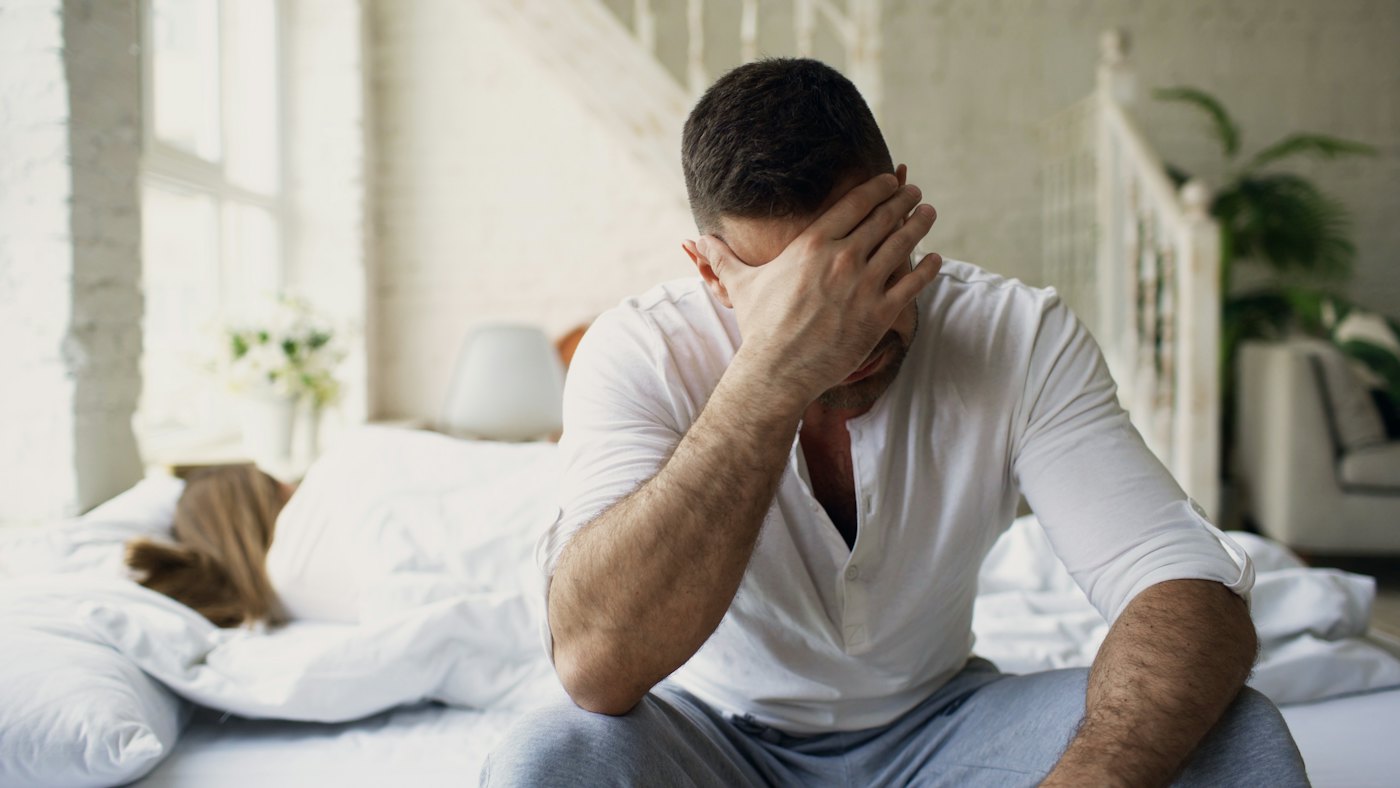
If you've noticed you're quicker to anger, more tired and less like yourself than you used to be, you're not imagining it, and you're not alone. Some people call this "irritable male syndrome." It isn't an official diagnosis, but the symptoms are real, and for some men a drop in testosterone is part of the reason.
What is irritable male syndrome?
The term comes from Scottish researcher Gerald Lincoln, who used it in a 2001 paper to describe a pattern he saw in male animals: when testosterone dropped quickly, they became nervous, irritable, sluggish and withdrawn.
Since then, the name has been used for men who notice a similar pattern, usually in their 40s and beyond, when testosterone naturally starts to fall. You may also hear it called "andropause" or "male menopause," though neither is a formal medical diagnosis either. Doctors usually call low testosterone with symptoms "testosterone deficiency" or "hypogonadism."
Signs of irritable male syndrome
Men describe it in different ways, but these come up most often.
- Short temper: Small things set you off, or you're more sarcastic and impatient than usual.
- Low mood: Feeling flat, down or unmotivated, sometimes without a clear reason.
- Low sex drive: Less interest in sex, and sometimes weaker erections.
- Fatigue: Feeling worn out even after a full night in bed.
- Poor sleep: Trouble falling or staying asleep, or feeling sleepy during the day.
- Brain fog: Trouble focusing or remembering things.
- Pulling away: Withdrawing from your partner, friends or things you used to enjoy.
These changes often show up first in relationships. A partner may notice them before you do.
How it's linked to low testosterone
Testosterone does more than drive sex drive and muscle. It also plays a part in mood, energy and sleep.
Levels fall slowly with age. In a long-term study of Massachusetts men, total testosterone dropped by roughly 0.4% to 1.6% a year, and faster in men with health problems. Weight gain, poor sleep, heavy drinking and some medications can push levels down further.
The Endocrine Society, the main professional group for hormone doctors, lists low sex drive and erection problems as signs that suggest low testosterone. It also lists depressed mood, poor concentration and sleep problems as possible signs, though it notes these are "nonspecific": they can come from many other causes.
What about treatment? In large clinical trials of men with confirmed low testosterone, treatment led to small improvements in mood and depressive symptoms, alongside clearer gains in sex drive and sexual function. Results vary from man to man, and testosterone isn't a treatment for depression on its own.
Other causes to rule out
Irritability and low mood have many possible causes. Before blaming hormones, it's worth looking at:
- Ongoing stress at work or at home
- Poor sleep, including sleep apnea (loud snoring or pauses in breathing)
- Depression or anxiety
- Heavy drinking
- Thyroid problems
- Side effects of medications, such as opioids or steroids
Several of these can also lower testosterone, so more than one thing may be going on at once.
How to find out if it's low testosterone
A blood test is the only way to know. Doctors usually look for:
- Total testosterone below about 300 ng/dL, the cut-off used by the American Urological Association
- Symptoms that match, such as low sex drive, fatigue or low mood
Low levels without symptoms, or symptoms with normal levels, usually don't mean treatment is needed.
What you can do
- 1
Start with the basics
Regular exercise, seven to nine hours of sleep, losing extra weight and cutting back on alcohol can all help mood and, in some men, testosterone.
- 2
Talk about it
Tell your partner what you're noticing. Pulling away usually makes things harder.
- 3
Get your levels checked
If the symptoms have lasted for weeks or months, ask for a testosterone test.
- 4
Consider treatment if your levels are low
Testosterone replacement therapy (TRT) can help men with confirmed low testosterone. It's usually a long-term treatment and needs regular follow-up labs, so it's a decision to make with a physician.
If you're struggling: if your mood is very low, or you have thoughts of harming yourself, don't wait for a lab test. Call or text 988, the Suicide & Crisis Lifeline, or talk to a doctor right away.
How Idun Rx can help
Idun Rx makes it simple to find out whether low testosterone is part of the picture.
- 1
Answer a short health questionnaire
Online, in a few minutes.
- 2
Get your blood drawn at a nearby Quest lab
Or book an at-home draw.
- 3
Meet with a licensed physician by video
Go over your results and symptoms together.
- 4
Treatment ships to your door
If TRT is right for you, with follow-up labs to keep your levels in a healthy range.
It's $149 a month, billed every 3 months ($447), and covers labs, the physician visit and medication. If the physician decides TRT isn't right for you, you get a full refund. Wondering how that compares with other online clinics? See how much TRT costs online.
Frequently asked questions
Is irritable male syndrome real?
The symptoms are real, but "irritable male syndrome" isn't an official medical diagnosis. It's a nickname for a group of symptoms that can have several causes, including low testosterone.
What age does it start?
It's most often described in men in their 40s, 50s and older, when testosterone has been falling for years. Younger men can have low testosterone too.
Can low testosterone make you angry?
It can play a part. Low testosterone is linked to low mood, poor sleep and fatigue, which can all make you more irritable. Stress, sleep problems and depression are just as likely to be involved, so it's worth checking.
Does TRT help with irritability?
In men with confirmed low testosterone, clinical trials found small improvements in mood and energy, and clearer improvements in sex drive. It isn't a cure-all, and it doesn't help men whose levels are normal.
How do I get my testosterone tested?
Your doctor can order a blood test, or you can start online with Idun Rx, which includes lab work at a Quest location.
Ready to take the next step? See if you qualify →
Sources
- Lincoln GA. The irritable male syndrome. Reprod Fertil Dev. 2001;13(7–8):567–576.
- Bhasin S, et al. Testosterone Therapy in Men With Hypogonadism: An Endocrine Society Clinical Practice Guideline. J Clin Endocrinol Metab. 2018;103(5):1715–1744.
- Mulhall JP, et al. Evaluation and Management of Testosterone Deficiency: AUA Guideline. J Urol. 2018;200(2):423–432.
- Feldman HA, et al. Age trends in the level of serum testosterone and other hormones in middle-aged men: longitudinal results from the Massachusetts Male Aging Study. J Clin Endocrinol Metab. 2002;87(2):589–598.
- Travison TG, et al. A population-level decline in serum testosterone levels in American men. J Clin Endocrinol Metab. 2007;92(1):196–202.
- Snyder PJ, et al. Effects of Testosterone Treatment in Older Men. N Engl J Med. 2016;374:611–624.
- Bhasin S, et al. Depressive Syndromes in Men With Hypogonadism in the TRAVERSE Trial: Response to Testosterone-Replacement Therapy. J Clin Endocrinol Metab. 2024.
- Walther A, et al. Association of Testosterone Treatment With Alleviation of Depressive Symptoms in Men: A Systematic Review and Meta-analysis. JAMA Psychiatry. 2019;76(1):31–40.